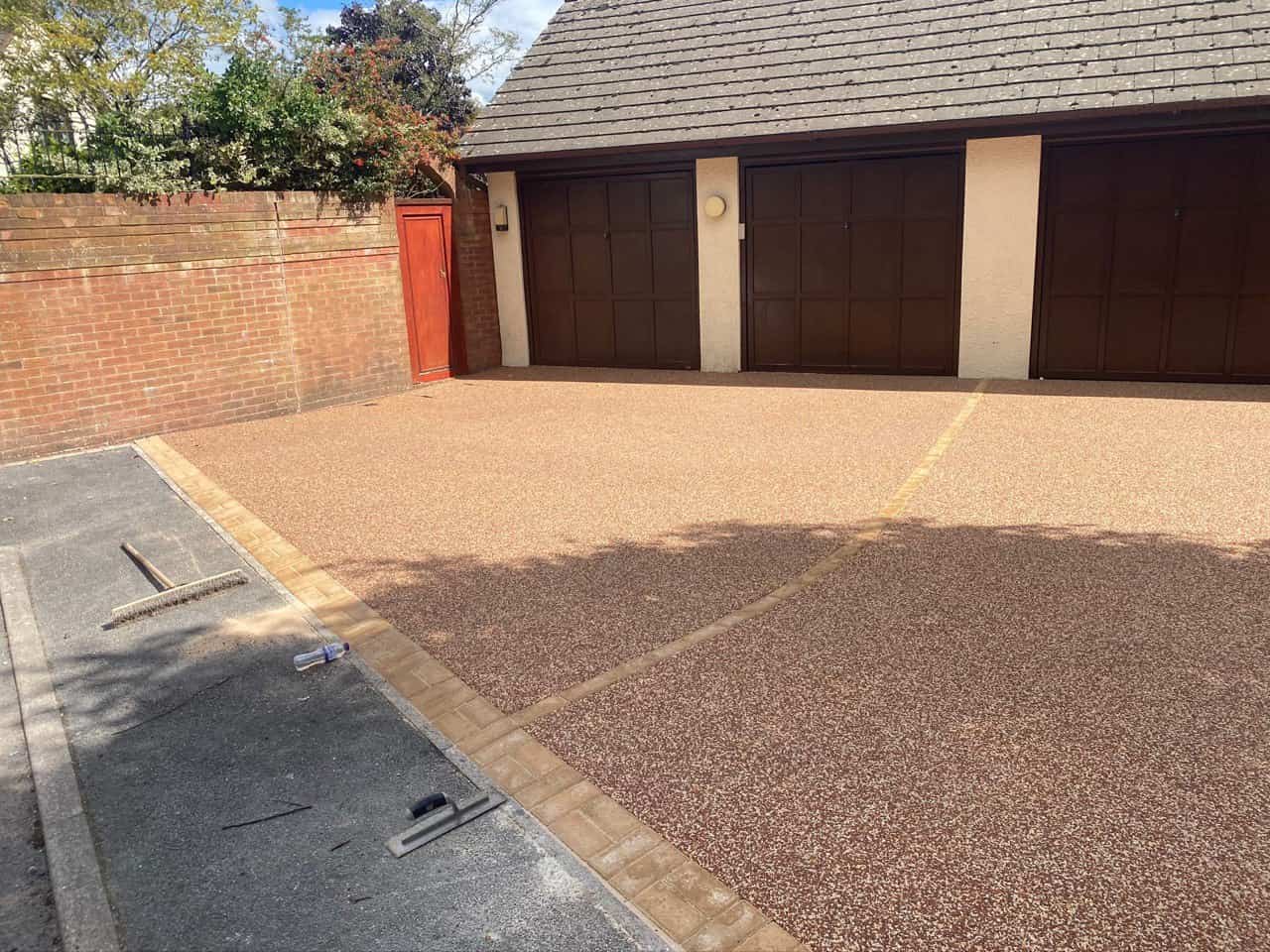
Why Does Proper Ground Preparation Matter for Resin Driveways?
The finished surface is usually the first thing people notice about a resin driveway, but much of its performance depends on work that can no longer be seen once installation is complete. A smooth resin bound finish needs a stable and appropriately prepared foundation beneath it. If the supporting layers are unsuitable, uneven or already deteriorating, problems within the groundwork can eventually affect the surface above.
For property owners in Witley, Surrey, this makes ground preparation one of the most important stages of resin driveway installation. The objective is not simply to create a level area before laying resin. Preparation needs to consider the condition of the existing surface, the supporting base, ground stability, drainage, levels, edges and how the driveway will be used. Getting these elements right provides a suitable foundation for the finished resin bound surface.
Why Is Ground Preparation So Important Before Laying a Resin Driveway?
A resin bound driveway works as part of a complete construction rather than as an independent surface layer. The resin and aggregate create the visible finish, but the layers underneath provide the support needed to cope with regular use.
If the groundwork is stable and correctly prepared, loads can be supported more consistently across the driveway. If the underlying construction contains weak areas, movement or significant deterioration, applying a new resin surface does not remove those problems.
This is why a professional installation begins by looking downwards before concentrating on the finished appearance.
A Resin Driveway Is Only as Reliable as the Surface Beneath It
A high-quality resin mixture cannot compensate for a failing foundation.
If the supporting surface moves, sinks or cracks significantly, stresses can be transferred to the resin bound layer above.
The visible problem may eventually appear within the resin, but its origin can be deeper within the driveway construction.
Proper preparation aims to identify these weaknesses before the final surface is installed.
Ground Preparation Begins With Assessing the Existing Area
Not every driveway begins from the same starting point.
Some properties may have an established hard surface, while others may contain areas of deterioration, settlement or previous repairs. The ground may also vary across different parts of the driveway.
Before deciding how to prepare the area, the existing condition needs to be understood.
This assessment helps determine which sections can form part of the new construction and which require further attention.
Existing Surfaces Should Not Automatically Be Covered
An existing driveway may appear to provide a convenient base for resin bound surfacing, but suitability should never be assumed from appearance alone.
The surface needs to be stable enough for the proposed installation.
Widespread cracking, movement, substantial deterioration or weak areas can indicate that additional preparation is required.
Simply covering these defects may conceal them temporarily without addressing their underlying cause.
Cracks Need to Be Considered Before Installation
Cracking in an existing driveway can have several causes.
A small isolated surface crack can present a very different situation from extensive cracking associated with movement beneath the surface.
The pattern, width and surrounding condition should therefore be assessed.
Where cracking indicates instability, installing resin directly over the affected area without suitable preparation can leave the underlying problem unresolved.
Existing Movement Is Particularly Important
A driveway that has already moved provides useful evidence about the ground beneath it.
Sunken sections, displaced materials or changing levels can indicate that support is inconsistent.
Before resin bound surfacing is installed, the reason for this movement should be considered.
Creating a smooth finish above an unstable section does not prevent the supporting ground from continuing to move.
Soft Areas Need Proper Attention
Some sections of an existing driveway may feel less stable than others.
These weak areas can result from inadequate support, previous deterioration or changes beneath the surface.
They should not simply be levelled cosmetically and hidden beneath the new driveway.
The objective of preparation is to create a consistently supportive construction across the area being surfaced.
The Sub-Base Provides Essential Support
The sub-base is a fundamental part of driveway construction.
Its purpose is to provide a stable supporting layer and help distribute loads across the area.
For a resin driveway used by vehicles, this support is particularly important.
An inadequate or inconsistent sub-base can allow sections of the driveway to settle differently, affecting the layers above.
Sub-Base Compaction Matters
Placing suitable material is only part of creating a dependable sub-base.
It also needs to be properly compacted.
Poorly consolidated material can continue settling after the driveway has been completed.
This can create depressions or changes in level that become visible at the surface.
Appropriate preparation aims to establish a stable foundation before subsequent layers are installed.
Preparation Should Be Consistent Across the Driveway
A driveway can contain sections constructed at different times.
For example, an older parking area may have been extended previously, leaving different forms of groundwork beneath adjoining surfaces.
These areas may not perform identically.
Before creating one continuous resin finish, the complete driveway should be assessed so that differences in the supporting construction can be addressed where necessary.
Vehicle Use Places Demands on the Foundation
A driveway needs to support more than pedestrian movement.
Vehicles repeatedly apply loads to the surface, particularly where they stop, turn or follow the same route.
The groundwork therefore needs to be appropriate for the way the area will be used.
A driveway designed primarily around its appearance without sufficient attention to supporting construction can be vulnerable to movement beneath regular vehicle use.
Parking Areas Need Consistent Support
Certain parts of a driveway may experience more concentrated loading.
Areas where vehicles are routinely parked can receive repeated pressure in similar positions.
If the supporting construction is weaker in these locations, settlement can become more noticeable.
Consistent groundwork helps the driveway perform as one connected surface rather than containing isolated weak sections.
Turning Areas Can Experience Repeated Stress
Vehicle movement is not always straight.
Where cars turn, reverse or manoeuvre regularly, the surface and underlying construction experience repeated loading.
This makes suitable preparation particularly important around entrances and turning areas.
The aim is to create a stable foundation throughout the complete usable driveway, not only where vehicles normally park.
Driveway Entrances Need Careful Preparation
The entrance can be one of the busiest sections of a driveway.
Vehicles repeatedly cross the same area as they enter and leave the property.
Transitions between surfaces can also occur here.
Proper preparation helps ensure that the entrance is integrated with the rest of the driveway rather than becoming an isolated weak point.
Edges Need Proper Support
Driveway edges can be vulnerable if they are not appropriately constructed and contained.
The resin bound surface needs clearly defined boundaries and suitable edge support.
Without careful preparation, edge sections can become less stable than the main body of the driveway.
Planning the perimeter from the beginning helps create a more complete installation.
Edging Is More Than a Decorative Detail
Edging can contribute significantly to the appearance of a resin driveway, but its purpose is not purely visual.
It helps define the surface and provides a clear termination point for the resin bound material.
The position and condition of the edging should therefore be established during preparation rather than decided only when the final surface is about to be laid.
Levels Need to Be Planned Before Surfacing
A driveway may appear relatively flat while still containing subtle differences in height.
These levels influence how the finished surface connects with entrances, paths, borders and surrounding ground.
Attempting to correct significant level problems solely within the final resin layer is not an appropriate substitute for proper groundwork.
The desired finished levels should be established during preparation.
Poor Levels Can Affect Everyday Use
A driveway with unsuitable levels can be inconvenient even if the surface itself looks attractive.
Unexpected changes in height can affect transitions between different areas and make the overall layout feel poorly connected.
Good preparation establishes a coherent surface profile before the resin bound layer is applied.
This contributes directly to how practical the completed driveway feels.
Drainage Should Be Considered From the Beginning
Water management is an important part of driveway design.
The way rainwater behaves depends on the complete construction, surrounding levels and drainage arrangement.
Resin bound surfacing can form part of a permeable construction when installed with an appropriate supporting system.
However, the resin surface should not be expected to compensate for unsuitable groundwork or unresolved drainage problems beneath and around it.
Existing Standing Water Should Be Investigated
If an old driveway regularly develops puddles, there is usually a reason.
Low spots, settlement, unsuitable falls or other underlying conditions may be influencing where water collects.
Installing a new surface without understanding the cause can leave the original problem unresolved.
Ground preparation provides an opportunity to correct inappropriate levels and address the factors contributing to standing water.
Low Points Can Reveal Previous Settlement
A depression containing water may be more than a drainage inconvenience.
It can indicate that the supporting construction has settled in that location.
If so, simply filling the surface to make it appear level may not provide a lasting solution.
The affected area should be assessed to determine whether the foundation beneath it requires attention.
Water Can Affect Weak Groundwork
Where water repeatedly reaches vulnerable supporting areas, deterioration can become more difficult to manage.
A stable driveway construction therefore needs both appropriate support and suitable water management.
Preparation should consider how water moves through and around the driveway rather than concentrating solely on the final visible finish.
Ground Conditions Can Vary Across One Property
The ground beneath a driveway is not always completely uniform.
Different areas may have been disturbed previously or constructed using different materials.
This can affect how individual sections respond under load.
A professional approach considers the complete installation area and identifies obvious inconsistencies before the resin bound surface is created.
Previous Driveway Extensions Need Assessment
An existing driveway may have been widened or extended at some point.
The newer section may have a different supporting construction from the original area.
If the complete surface is going to receive one continuous resin finish, the relationship between these sections matters.
Preparation can help address differences that might otherwise become apparent after installation.
Previous Repairs Can Provide Useful Information
Old repair areas are worth examining before a new driveway is installed.
They may show where previous cracking, settlement or deterioration occurred.
A sound repair may remain perfectly suitable, but repeated repairs in the same location can suggest that the underlying cause deserves further investigation.
Understanding the history visible within the existing surface can help guide appropriate preparation.
Ground Preparation Helps Prevent Problems Being Hidden
One of the risks of resurfacing is concentrating on how quickly the old driveway can be made to look new.
A fresh resin surface can dramatically change appearance, but cosmetic improvement should not come at the expense of addressing structural problems.
Proper preparation ensures that significant defects are investigated before they disappear beneath the finished layer.
A Smooth Surface Does Not Prove the Foundation Is Sound
Once resin bound surfacing has been installed, the driveway can appear extremely consistent.
That appearance does not change what is happening underneath.
If unstable groundwork remains, the problem can continue developing out of sight.
The quality of preparation is therefore particularly important precisely because it becomes largely invisible after the installation has been completed.
Resin Bound Surfacing Needs a Suitable Base
The resin and aggregate mixture is designed to form the finished wearing surface.
It should be installed over an appropriate base prepared for the intended system.
The exact preparation depends on the existing site and proposed construction.
This is why each driveway should be assessed individually rather than assuming that the same installation method can be applied to every property.
The Base Should Be Appropriate for Vehicle Traffic
A patio and driveway may use similar-looking resin bound finishes, but their usage requirements can differ substantially.
Driveways need to accommodate vehicles.
The supporting construction must therefore be suitable for this regular loading.
Professional driveway installation considers intended use when determining how the area should be prepared.
Groundwork Can Influence the Final Appearance
Preparation affects more than structural performance.
Poor levels or inconsistencies beneath the surface can influence how the finished driveway looks.
A carefully prepared base helps provide the conditions needed for a consistent resin bound finish.
This allows the appearance of the driveway to reflect the quality of the construction beneath it.
Preparation Helps Create Cleaner Transitions
Driveways frequently connect with paths, entrances and other hard surfaces.
These transitions should be planned carefully.
Incorrect heights can create awkward steps or poorly finished edges.
By establishing levels during groundwork, the finished resin surface can meet surrounding areas more naturally.
Borders Should Be Planned Before the Resin Is Laid
Borders can be used to frame a resin driveway or distinguish different sections.
Their position affects the shape and dimensions of the main surface.
Installing or preparing these features before the final resin work provides clear boundaries and helps create a deliberate layout.
Leaving such decisions until the final stage can make the installation unnecessarily complicated.
Driveway Shape Can Influence Ground Preparation
Not every driveway is a simple rectangular area.
Curves, narrow entrances and wider parking sections can all create different construction requirements.
Preparation needs to follow the complete layout and provide appropriate support throughout.
This is particularly important where vehicles regularly change direction or use specific parts of the surface more intensively.
Larger Driveways Need Consistent Groundwork Throughout
As the surface area increases, inconsistencies in the foundation can become more significant.
One weak section within an otherwise sound driveway can eventually create a localised problem.
Proper preparation aims to provide consistent support across the complete installation rather than treating different areas independently without considering how they connect.
Small Driveways Still Need Suitable Preparation
A smaller driveway does not remove the need for appropriate groundwork.
Vehicle loading can still be concentrated across a limited area, particularly where cars repeatedly follow the same route.
Preparation should therefore reflect intended use rather than simply the dimensions of the driveway.
Ground Preparation Can Improve the Overall Layout
Installing a new resin driveway provides an opportunity to consider whether the existing layout works effectively.
Parking space, access, turning areas and pedestrian routes can all be reviewed before construction begins.
Groundwork can then be planned around the intended layout rather than automatically recreating every limitation of the old driveway.
The Finished Surface Should Follow the Prepared Foundation
Resin bound surfacing should be the final expression of a correctly prepared driveway, not the material used to create the underlying structure.
Levels, stability and major surface corrections should already have been established.
This allows the resin layer to perform its intended role as the finished surface rather than being relied upon to compensate for deeper construction issues.
Rushing Preparation Can Affect the Entire Installation
Because groundwork is eventually hidden, it can be tempting to concentrate attention on the more visually impressive final stage.
However, shortcuts beneath the surface can affect the complete driveway.
Once the resin is installed, correcting an underlying problem can require disturbing the finished area.
Taking the time to prepare the foundation properly is therefore an essential part of achieving a well-constructed driveway.
Signs an Existing Driveway May Need Additional Preparation
More extensive groundwork may need to be considered where the existing area has:
- widespread cracking rather than one isolated surface defect;
- noticeable sinking or settlement;
- soft or unstable sections;
- recurring depressions;
- significant changes in level;
- standing water in the same areas;
- several previous repair patches;
- movement between adjoining sections;
- deteriorating or unsupported edges;
- different surfaces constructed at different times.
These signs do not automatically determine the construction method. They indicate that the underlying condition should be investigated before resin bound surfacing is installed.
Why Professional Assessment Matters Before Installation
Ground conditions cannot always be judged from the appearance of the existing surface alone.
A professional assessment considers the driveway’s stability, existing construction, drainage, levels, edges and intended vehicle use.
This helps determine what preparation is actually necessary.
Some areas may require relatively straightforward work, while others may need more extensive attention before they provide a suitable foundation.
Proper Preparation Protects the Value of the Finished Work
The most visible part of a resin driveway is the final aggregate finish, but investing effort only in appearance overlooks the purpose of the layers beneath it.
Good groundwork provides the support that allows the completed driveway to perform as intended.
It also reduces the likelihood that known defects within the existing area are simply transferred into the new installation.
For this reason, preparation should be regarded as an integral part of the driveway rather than a preliminary task to be completed as quickly as possible.
Professional Resin Driveway Installation in Witley, Surrey
At NS Driveways Witley, we understand that a quality resin bound driveway begins well before the final surface is laid.
The existing area needs to be assessed carefully so that weak sections, unsuitable levels, drainage considerations and supporting construction can be addressed as part of the installation. Where an existing base is suitable, it may be possible to work with it appropriately. Where deterioration or instability is present, the necessary preparation should be completed rather than simply covering the problem.
For properties in Witley, Surrey, this condition-led approach helps create a resin driveway in which the groundwork and finished surface work together as one complete construction.
Conclusion
Proper ground preparation matters for resin driveways because the finished resin bound surface depends on the stability and suitability of everything beneath it. Even an attractive, professionally finished surface can be affected if it is installed over weak, moving or poorly prepared groundwork.
Assessing the existing driveway, creating appropriate support, addressing unstable areas, planning levels, considering drainage and establishing suitable edges are all important parts of the process. Preparation also provides an opportunity to investigate existing cracking, settlement and standing water rather than simply hiding these problems beneath a new surface.
A resin driveway should therefore be considered as a complete construction, not merely a decorative surface layer. The quality of the groundwork may become invisible once installation is finished, but it remains fundamental to how the driveway performs.
If you are considering a resin driveway for your property in Witley, Surrey, contact NS Driveways Witley. We can assess the existing area and determine the appropriate preparation and resin bound surfacing approach based on the condition and intended use of your driveway.
Call us on: 01428 771 493
Click here to find out more about NS Driveways Witley
Click here to complete our contact form and see how we can help with your driveways.